

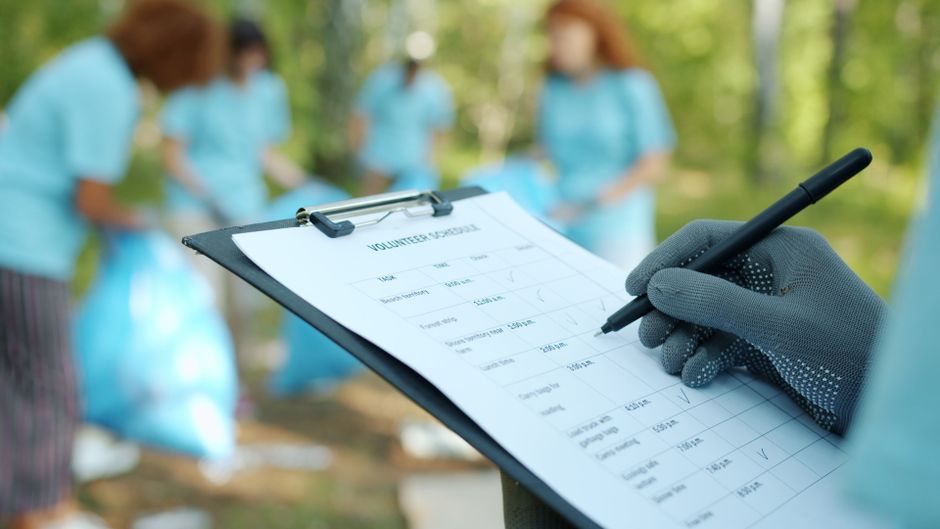
Le bénévolat peut soutenir le bien-être, mais il ne répare pas une fatigue profonde en trois réunions. Les données disponibles invitent surtout à regarder le moment de vie, la régularité et la place réelle de la mission.
Avec trois enfants, on connaît la chanson : une bonne intention arrive dans l’agenda, puis la crèche ferme, le rendez-vous médical glisse et quelqu’un renverse son verre sur le seul pantalon propre. Donner du temps à une association peut offrir du sens et des rencontres, à condition de rester compatible avec le sommeil, la famille et le travail.
Le bénévolat recouvre des réalités très différentes : aider une association de quartier, participer à une collecte, accompagner des personnes ou contribuer à une action en ligne. Une mission ponctuelle ne demande pas la même disponibilité qu’un engagement hebdomadaire dans une équipe connue.
Donner un coup de main sans lâcher le guidon
En 2016, une analyse longitudinale publiée dans BMJ Open a exploité 66 343 observations du British Household Panel Survey. Elle comparait plusieurs niveaux de participation bénévole, de l’engagement hebdomadaire à l’absence de bénévolat, et mesurait le bien-être mental avec le General Health Questionnaire.
L’association avec un meilleur bien-être mental apparaissait surtout après 40 ans et jusqu’à un âge avancé. Elle ne se retrouvait pas de la même façon au début et au milieu de l’âge adulte. Ce résultat décrit une association, pas un effet automatique du bénévolat.
Les personnes qui s’engagent peuvent déjà disposer de davantage de temps, de soutien, de stabilité ou d’une meilleure santé. L’analyse ne permettait pas d’écarter complètement ces différences. Un lien statistique ne devient pas une ordonnance de bénévolat.
Pour une mère en reprise du travail, en post-partum ou simplement coincée sous un sac à dos invisible de charge mentalela question n’est donc pas « combien puis-je donner? », mais « quelle place réelle cette mission occupe-t-elle dans ma semaine? ». Le compteur d’heures ne mesure ni la fatigue avant la mission, ni le temps de trajet, ni la récupération après.
Le moral ne se commande pas au bénévolat

Le 28 janvier 2020, un essai contrôlé randomisé publié dans Aging & Mental Health par Jiang et ses collègues a suivi 384 adultes âgés de 50 à 96 ans. Les participants ont été répartis entre quatre séances d’une heure destinées à encourager le bénévolat et un programme actif consacré à l’activité physique. Les chercheurs ont réévalué leur situation après six semaines, trois mois et six mois.
Le programme n’était pas directement associé à une évolution des symptômes dépressifs, du sentiment de sens, de l’efficacité personnelle ou de l’autonomie. Un effet indirect apparaissait toutefois chez les participants qui avaient augmenté leur temps de bénévolat à trois mois : ils rapportaient moins de symptômes dépressifs à six mois.
La nuance compte. L’intention seule ne suffit pas, et un engagement de courte durée ne produit pas nécessairement un changement rapide. Surtout, ces résultats concernent des adultes de 50 à 96 ans, pas des mères de jeunes enfants. On ne peut pas les transposer tels quels à une famille qui jongle entre biberons, réunions et reprise du travail.
Une mission qui rogne sur le sommeil, impose des déplacements impossibles ou ajoute une obligation à une période déjà saturée peut donc manquer son objectif. La bonne action citoyenne ne devrait pas exiger de finir la semaine en mode batterie rouge.
Le village, sans la mission commando

Le motif de l’engagement compte autant que le nombre d’heures. Cherche-t-on surtout à aider une cause, à rencontrer des personnes, à retrouver une activité hors de la maison ou à utiliser une compétence? La mission à choisir ne sera pas la même dans chaque cas.
Si le besoin principal est de parler à d’autres adultes, une activité entièrement à distance ne répondra pas forcément à l’attente. Si la garde manque ou si les trajets sont impossibles, elle peut au contraire être la seule option tenable. Le format n’est pas meilleur en soi : il doit correspondre à ce que l’on cherche et à ce que la semaine autorise.
Dans une famille, le bénévolat devient aussi une question de coparentalité et de répartition des tâches. Si une mère organise seule les horaires, la garde et les trajets, la mission risque d’alourdir la charge mentale au lieu d’ouvrir une respiration. Le « je vais juste aider une heure » peut vite se transformer en relances, tableau de présence et goûters à prévoir.
Le bon groupe ne compense pas une organisation qui repose sur une seule personne.
Bénévole, pas corvéable
Avant de dire oui, quatre questions permettent de tester la compatibilité entre la mission et la vie actuelle. Pas besoin de monter une stratégie militaire, mais il faut regarder les contraintes qui restent souvent hors de l’affiche.
- Quel format tient dans la semaine réelle? Comparez une action ponctuelle, une heure à distance et une présence régulière. Choisissez en fonction de votre énergie disponible, pas de celle que vous espérez retrouver dimanche soir.
- Quel est le coût logistique total? Vérifiez le temps de trajet, la garde des enfants, la préparation éventuelle et le temps nécessaire pour récupérer. Une heure sur place peut occuper une demi-journée une fois tout additionné.
- Quelle limite annonce-t-on dès le départ? Fixez un nombre d’heures, une période d’essai ou une date de fin. Demandez aussi qui est la personne référente et quelles sont les règles d’annulation.
- Que reste-t-il après deux ou trois missions? Notez l’énergie dépensée, les rencontres obtenues, les tensions à la maison et le sentiment d’utilité. Si le coût déborde les ressources disponibles, réduire ou arrêter n’est pas un échec.
Passer le relais avec l’autre parent, quand c’est possible, évite de déplacer toute la charge sur la maison. Une mission choisie sans accord sur les horaires ne crée pas forcément du lien social : elle peut simplement envoyer la facture organisationnelle à quelqu’un d’autre.
Après deux ou trois occasions, la question reste terre à terre : reste-t-il assez d’énergie pour le sommeil, les enfants et le travail? Si la réponse est non, ce n’est peut-être pas le bon engagement, ou pas le bon moment. Même une cause qui compte beaucoup n’a pas besoin de transformer le sac à dos invisible en déménagement.
Sources et références scientifiques
- Jiang D, Warner LM, Chong AM, Li T, Wolff JK, Chou KL.. Benefits of volunteering on psychological well-being in older adulthood: evidence from a randomized controlled trial.. Aging & mental health. 2020. DOI: 10.1080/13607863.2020.1711862 · PMID: 31986905. (résumé scientifique structuré; texte intégral non fourni)
- Association of volunteering with mental well-being: a lifecourse analysis of a national population-based longitudinal study in the UK – PMC. BMJ open. DOI: 10.1136/bmjopen-2016-011327 · PMID: 27503861.
- 1.Wilson J. Volunteering. Annu Rev Sociol 2000;2:15-240. [Google Scholar].
- 2.Jenkinson CE, Dickens AP, Jones K et al. Is volunteering a public health intervention? A systematic review and meta-analysis of the health and survival of volunteers. BMC Public Health 2013;13:773 10.1186/1471-2458-13-773 [DOI] [PMC free article] [PubMed] [Google Scholar]. doi:10.1186/1471-2458-13-773.
- 3.Binder M, Freytag A. Volunteering, subjective well-being and public policy. J Econ Psychol 2013;34:97-119. 10.1016/j.joep.2012.11.008 [DOI] [Google Scholar]. doi:10.1016/j.joep.2012.11.008.
- 4.Burr JA, Tavares J, Mutchler JE. Volunteering and hypertension risk in later life. J Aging Health 2011;23:24-51. 10.1177/0898264310388272 [DOI] [PubMed] [Google Scholar]. doi:10.1177/0898264310388272.
- 5.Glass TA, De Leon CF, Bassuk SS et al. Social engagement and depressive symptoms in late life: longitudinal findings. J Aging Health 2006;18:604-28. 10.1177/0898264306291017 [DOI] [PubMed] [Google Scholar]. doi:10.1177/0898264306291017.
- 6.Greenfield EA, Marks NF. Formal volunteering as a protective factor for older adults’ psychological well-being. J Gerontol B Psychol Sci Soc Sci 2004;59:S258-64. 10.1093/geronb/59.5.S258 [DOI] [PubMed] [Google Scholar]. doi:10.1093/geronb/59.5.S258.
- 7.Li Y, Ferraro KF. Volunteering in middle and later life: is health a benefit, barrier or both? Soc Forces 2006;85:497-519. 10.1353/sof.2006.0132 [DOI] [Google Scholar]. doi:10.1353/sof.2006.0132.
- 8.Meier S, Stutzer A. Is volunteering rewarding in itself? Economica 2008;75:39-59. [Google Scholar].
- 9.Morrow-Howell N, Hinterlong J, Rozario PA et al. Effects of volunteering on the well-being of older adults. J Gerontol B Psychol Sci Soc Sci 2003;58:S137-45. 10.1093/geronb/58.3.S137 [DOI] [PubMed] [Google Scholar]. doi:10.1093/geronb/58.3.S137.
- 10.Musick MA, Wilson J. Volunteering and depression: the role of psychological and social resources in different age groups. Soc Sci Med 2003;56:259-69. 10.1016/S0277-9536(02)00025-4 [DOI] [PubMed] [Google Scholar]. doi:10.1016/S0277-9536(02)00025-4.
- 11.Schreier HM, Schonert-Reichl KA, Chen E. Effect of volunteering on risk factors for cardiovascular disease in adolescents: a randomized controlled trial. JAMA Pediatr 2013;167:327-32. 10.1001/jamapediatrics.2013.1100 [DOI] [PubMed] [Google Scholar]. doi:10.1001/jamapediatrics.2013.1100.
- 12.Schwingel A, Niti NM, Tang C et al. Continued work employment and volunteerism and mental well-being of older adults: Singapore longitudinal ageing studies. Age Ageing 2009;38:531-7. 10.1093/ageing/afp089 [DOI] [PubMed] [Google Scholar]. doi:10.1093/ageing/afp089.
- Comparing Neighborhood-Focused Activism and Volunteerism: Psychological Well-Being and Social Connectedness – PMC. Journal of community psychology. DOI: 10.1002/jcop.20528 · PMID: 27087709.
- Becker AB, Israel BA, Schulz AJ, Parker EA, Klem L. Predictors of perceived control among African American women in Detroit: Exploring empowerment as a multilevel construct. Health Education & Behavior. 2002;29:699-715. doi: 10.1177/109019802237939. [DOI] [PubMed] [Google Scholar]. doi:10.1177/109019802237939.
- Christens B, Speer P. Contextual influences on participation in community organizing: A multilevel longitudinal study. American Journal of Community Psychology. 2011 doi: 10.1007/s10464-010-9393-y. [DOI] [PubMed] [Google Scholar]. doi:10.1007/s10464-010-9393-y.
- Downtown J, Jr, Wehr P. Persistent pacifism: How activist commitment is developed and sustained. Journal of Peace Research. 1998;35:531-550. [Google Scholar].
- Einwohner RL. Motivational framing and efficacy maintenance: Animal rights activists’ use of four fortifying strategies. Sociological Inquiry. 2002;43:509-526. [Google Scholar].
- Eliasoph N. Avoiding politics: How Americans produce apathy in everyday life. Cambridge, England: Cambridge University Press; 1998. [Google Scholar].
- Glass TA, de Leon CM, Marottoli RA, Berkman LF. Population based study of social and productive activities as predictors of survival among elderly Americans. British Medical Journal. 1999;319:478-483. doi: 10.1136/bmj.319.7208.478. [DOI] [PMC free article] [PubMed] [Google Scholar]. doi:10.1136/bmj.319.7208.478.
- Gutierrez LM. Working with women of color: An empowerment perspective. Social Work. 1990;35:149-153. [Google Scholar].
- House JS, Umberson D, Landis KR. Structures and processes of social support. Annual Review of Sociology. 1988;14:293-318. [Google Scholar].
- Hustinx L, Cnaan RA, Handy F. Navigating theories of volunteering: A hybrid map for a complex phenomenon. Journal for the Theory of Social Behaviour. 2010;40(4):410-434. doi: 10.1111/j.1468-5914.2010.00439.x. [DOI] [Google Scholar]. doi:10.1111/j.1468-5914.2010.00439.x.
- Independent Sector. Giving and volunteering in the United States: Findings from a national survey. Washington, D. C.: Independent Sector; 2001. [Google Scholar].
- Israel BA, Checkoway B, Schulz A, Zimmerman M. Health education and community empowerment: Conceptualizing and measuring perceptions of individual, organizational, and community control. Health Education Behavior. 1994;21:149-170. doi: 10.1177/109019819402100203. [DOI] [PubMed] [Google Scholar]. doi:10.1177/109019819402100203.
- Jackson SE, Schwab RL, Schuler RS. Toward an understanding of the burnout phenomenon. Journal of Applied Psychology. 1986;71:630-640. doi: 10.1037/0021-9010.71.4.630. [DOI] [PubMed] [Google Scholar]. doi:10.1037/0021-9010.71.4.630.
- Seeking connection: a mixed methods study of mental well-being and community volunteerism among international migrants in Japan – PMC. BMC public health. DOI: 10.1186/s12889-020-09381-2 · PMID: 32819356.
- 1.International Organization for Migration. Migration and migrants: a global overview. World Migration Report 2020. 2019. [Google Scholar].
- 2.Renzaho AMN. Health, social, and economic impact of voluntary migration. In: Renzaho AMN, editor. Globalisation, migration and health: challenges and opportunities. 1st ed. London: Imperial College Press; 2016. p. 123-203..
- 3.Anjara SG, Nellums LB, Bonetto C, Van Bortel T. Stress, health and quality of life of female migrant domestic workers in Singapore: a cross-sectional study. BMC Womens Health. 2017;17(1):1-13. doi: 10.1186/s12905-017-0442-7. [DOI] [PMC free article] [PubMed] [Google Scholar]. doi:10.1186/s12905-017-0442-7.
- 4.Pía Juárez S, Honkaniemi H, Dunlavy AC, Aldridge RW, Barreto ML, Katikireddi V, et al. Effects of non-health-targeted policies on migrant health: a systematic review and meta-analysis. Lancet Glob Health. 2019;7(4):e420-e435. doi: 10.1016/S2214-109X(18)30560-6. [DOI] [PMC free article] [PubMed] [Google Scholar]. doi:10.1016/S2214-109X(18)30560-6.
- 5.United Nations General Assembly. Global compact for safe, orderly and regular migration. New York City: United Nations; 2018. Accessed 1 Dec 2019..
- stañeda H, Holmes SM, Madrigal DS, Young MED, Beyeler N, Quesada J. Immigration as a social determinant of health. Annu Rev Public Health. 2015;36(1):375-392. doi: 10.1146/annurev-publhealth-032013-182419. [DOI] [PubMed] [Google Scholar]. doi:10.1146/annurev-publhealth-032013-182419.
- 7.Ministry of Justice. Foreign National Residents by Nationality. 2018. [Google Scholar].
- 8.Leppold C, Ozaki A, Shimada Y, Morita T, Tanimoto T. Defining and acting on global health: the case of Japan and the refugee crisis. Int J Heal Policy Manag. 2016;5(8):457-460. doi: 10.15171/ijhpm.2016.68. [DOI] [PMC free article] [PubMed] [Google Scholar]. doi:10.15171/ijhpm.2016.68.
- 9.Korekawa Y. Migration transition in Japan and its mid- to long-term consequence: beyond the japanese exceptionalism [in Japanese] Migr Policy Rev. 2018;10:13-28. [Google Scholar].
- 10.Keyes CLM. Mental well-being: international contributions to the study of positive mental health. Dordrecht: Springer Netherlands; 2013. Promoting and protecting positive mental health: early and often throughout the lifespan; pp. 3-28. [Google Scholar].
- 11.Miller R, Tomita Y, Ong KI, Shibanuma A, Jimba M. Mental well-being of international migrants to Japan: a systematic review. BMJ Open. 2019;9(11):e029988. doi: 10.1136/bmjopen-2019-029988. [DOI] [PMC free article] [PubMed] [Google Scholar]. doi:10.1136/bmjopen-2019-029988.
- 12.Migration Integration Policy Index. Japan. 2015. Accessed 11 Dec 2019..
- Volunteering and its Surprising Benefits. 2018.
- Carr, D. C., Kail, B. L., & Rowe, J. W. (2018). The Relation of Volunteering and Subsequent Changes in Physical Disability in Older Adults. The Journals of Gerontology: Series B, 73(3), 511-521. Link.
- Kim, E. S., Whillans, A. V., Lee, M. T., Chen, Y., & VanderWeele, T. J. (2020). Volunteering and Subsequent Health and Well-Being in Older Adults: An Outcome-Wide Longitudinal Approach. American Journal of Preventive Medicine, 59(2), 176-186. Link.
- Lawton, R. N., Gramatki, I., Watt, W., & Fujiwara, D. (2021). Does Volunteering Make Us Happier, or Are Happier People More Likely to Volunteer? Addressing the Problem of Reverse Causality When Estimating the Wellbeing Impacts of Volunteering. Journal of Happiness Studie, 22(2), 599-624. Link.
- Okun, M. A., Yeung, E. W., & Brown, S. (2013). Volunteering by older adults and risk of mortality: A meta-analysis. Psychology and Aging, 28(2), 564-577. Link.
- Salt, E., Crofford, L. J., & Segerstrom, S. (2017). The Mediating and Moderating Effect of Volunteering on Pain and Depression, Life Purpose, Well-Being, and Physical Activity. Pain Management Nursing, 18(4), 243-249. Link.
- Nichol, B., Wilson, R., Rodrigues, A., & Haighton, C. (2024). Exploring the Effects of Volunteering on the Social, Mental, and Physical Health and Well-being of Volunteers: An Umbrella Review. Voluntas: International Journal of Voluntary and Nonprofit Organizations, 35(1), 97-128. Link.
- Carr, D. C., Kail, B. L., & Rowe, J. W. (2018). The Relation of Volunteering and Subsequent Changes in Physical Disability in Older Adults. The Journals of Gerontology: Series B, 73(3), 511-521..
- Kim, E. S., Whillans, A. V., Lee, M. T., Chen, Y., & VanderWeele, T. J. (2020). Volunteering and Subsequent Health and Well-Being in Older Adults: An Outcome-Wide Longitudinal Approach. American Journal of Preventive Medicine, 59(2), 176-186..
- Lawton, R. N., Gramatki, I., Watt, W., & Fujiwara, D. (2021). Does Volunteering Make Us Happier, or Are Happier People More Likely to Volunteer? Addressing the Problem of Reverse Causality When Estimating the Wellbeing Impacts of Volunteering. Journal of Happiness Studie, 22(2), 599-624..
- Okun, M. A., Yeung, E. W., & Brown, S. (2013). Volunteering by older adults and risk of mortality: A meta-analysis. Psychology and Aging, 28(2), 564-577..
- Salt, E., Crofford, L. J., & Segerstrom, S. (2017). The Mediating and Moderating Effect of Volunteering on Pain and Depression, Life Purpose, Well-Being, and Physical Activity. Pain Management Nursing, 18(4), 243-249..
- Nichol, B., Wilson, R., Rodrigues, A., & Haighton, C. (2024). Exploring the Effects of Volunteering on the Social, Mental, and Physical Health and Well-being of Volunteers: An Umbrella Review. Voluntas: International Journal of Voluntary and Nonprofit Organizations, 35(1), 97-128..
- What are the benefits of volunteering? – Volunteero.
- Volunteer Connection. The Benefits of Volunteering: Why It Matters. 2025.
